When your home takes a hit, the insurance company sends someone out to assess the damage. They introduce themselves, shake your hand, and seem genuinely helpful. It’s easy to assume they’re there to take care of you.
They’re not.
The adjuster standing in your living room works for the insurance company. They were hired, trained, and paid by the same organization that has a financial interest in settling your claim for as little as possible. That’s not cynicism. That’s just how the system works.
We’ve spent years on the other side of that table. Here’s what you should know.
The Company Adjuster’s Job Is Not What You Think
Insurance company adjusters are called “staff adjusters” or “independent adjusters,” depending on how the insurer staffs their claims department. Staff adjusters are direct employees. Independent adjusters are contractors brought in during busy periods, like after a major storm.
Either way, their job is to assess your claim on behalf of the insurance company, not on behalf of you.
They’re professionally trained to identify coverage exclusions, apply depreciation, and document damage in a way that supports a lower settlement. They’re not doing anything illegal. They’re doing exactly what they were hired to do.
The problem is that most Connecticut homeowners don’t realize this until after they’ve accepted a settlement that doesn’t cover the full cost of their repairs.
How Insurance Adjusters Are Incentivized
Most people assume adjusters get paid a flat salary and have no personal stake in how much your claim pays out. That’s not always accurate.
Performance-based compensation. Some staff adjusters receive bonuses tied to claim closure rates or cost containment metrics. Settling claims quickly and below reserve saves the company money. Adjusters who do this consistently get rewarded.
Independent adjuster billing structures. Independent adjusters are often paid per claim. The faster they close files, the more claims they can handle. Speed benefits them financially, even if a rushed inspection misses significant damage in your home.
Carrier relationships. Independent adjusters who work regularly for a carrier want to keep that relationship. Consistently low settlements keep them on the preferred vendor list. Advocating too hard for a policyholder can end that relationship.
None of this means your adjuster is a bad person. Most are professionals doing their jobs. But their financial incentives point in a different direction than yours.
Common Tactics That Reduce Your Payout
After handling hundreds of claims across Connecticut, we’ve seen the same patterns show up again and again. Here’s what to watch for.
The fast settlement offer. After a significant loss, you may receive a settlement offer within days. This can feel like a relief. But damage from fire, water, and storms often takes weeks to fully document. Accepting early locks you in before you know the true scope of your loss.
Scope of damage disputes. Adjusters may only document visible damage. Water that wicked into wall cavities, mold that hasn’t surfaced yet, structural issues behind finished surfaces: these get missed or excluded when an inspection is rushed or superficial. You’re left with a settlement that covers what they found, not what’s actually there.
Depreciation applied broadly. Insurance policies often distinguish between actual cash value (ACV) and replacement cost value (RCV). Adjusters may apply high depreciation percentages to materials and labor, reducing what you receive upfront. Some homeowners never recover the withheld depreciation because they don’t know how to file for it.
Separating damage categories. After a fire, there’s fire damage, smoke damage, and water damage from suppression efforts. An adjuster might acknowledge the fire damage but minimize or dispute the smoke and water damage separately. Each category handled in isolation results in a smaller total payment.
Policy exclusion citations. Adjusters are trained to read policies in favor of the carrier. If there’s an exclusion that might apply, even loosely, they’ll note it. Many homeowners accept a denial without knowing that the exclusion was applied incorrectly or that the damage fits under a different covered cause.
What “Independent” Really Means for Adjusters
The word “independent” is worth addressing directly. When you hear it, it sounds neutral. It sounds like the adjuster has no stake in the outcome.
In practice, independent adjusters are independent from the insurance company in an employment sense. They’re contractors, not staff. But they’re still retained by the carrier, paid by the carrier, and working within guidelines set by the carrier.
They are not independent in the sense that most homeowners assume, which is to say, independent on your behalf.
If you want someone who is actually independent from the insurance company and working only for you, that’s a public adjuster.
The Difference Between a Company Adjuster and a Public Adjuster
A company adjuster works for the insurance carrier. A public adjuster works for you.
Public adjusters are licensed by the state of Connecticut to represent policyholders in property insurance claims. We review your policy, document your damage, calculate your full loss, and present your claim to the insurance company with the evidence needed to support a fair settlement.
We don’t get paid unless you recover. Our fee is a percentage of your settlement. That structure means our interests are aligned with yours, not with the carrier’s.
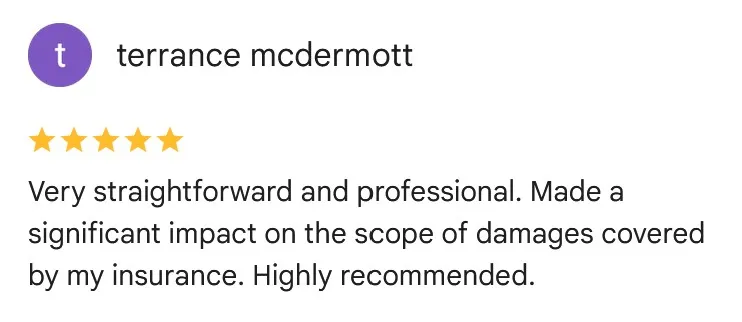
The difference in outcomes can be significant. Policyholders who work with a public adjuster often recover substantially more than those who go it alone, particularly on complex or large-scale losses.
What You Should Do After a Loss
You don’t have to accept the first offer. You don’t have to rely solely on the company adjuster’s assessment. And you don’t have to figure this out on your own.
Before you sign anything or accept a settlement, get an independent review of your claim. We offer free claim reviews for Connecticut homeowners. We’ll assess what you’ve been offered, compare it against your documented damage and policy language, and give you a clear picture of where you stand.
If the settlement reflects the true cost of your loss, we’ll tell you. If it doesn’t, we’ll tell you that too, and explain what your options are.
You paid for coverage. You deserve a settlement that matches what you actually lost.
Contact us today for a free claim review. There’s no obligation, and the call could be worth thousands of dollars to your recovery.